Mechanical Engineering Department
Gedung F & G (Hery Hartanto) lantai 5
Jl. Kyai Tapa No. 1 Grogol
Jakarta Barat
Indonesia, 11440
Phone : (62-21) 566 3232 ext. 8434
Location map


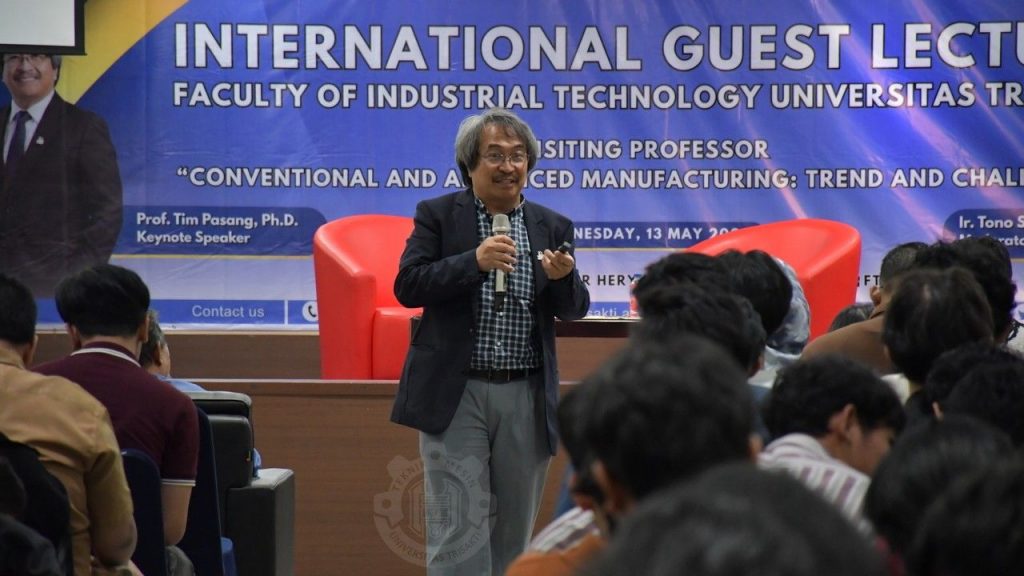

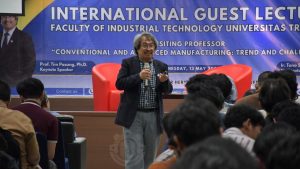
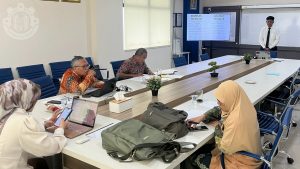
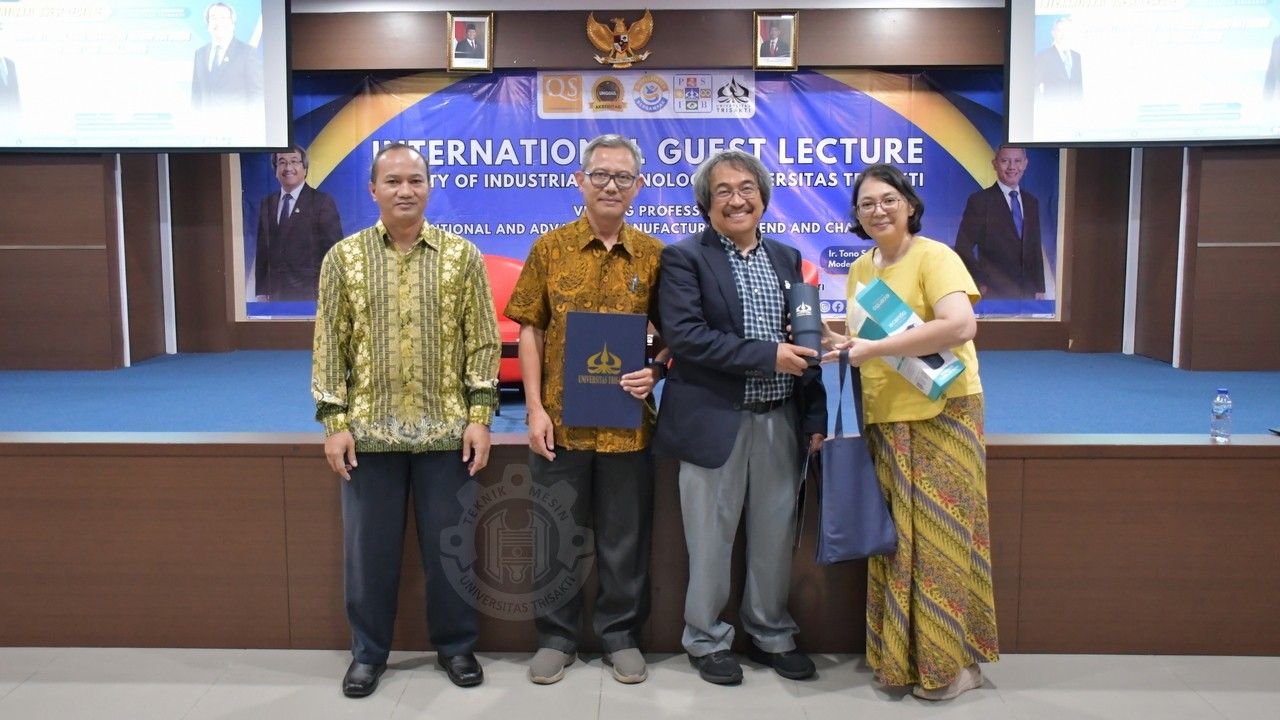
On Wednesday, May 13, 2026, the Faculty of Industrial Technology at Universitas Trisakti held a public lecture on the topic “Conventional and Advanced Manufacturing: Trends and Challenges.” The speaker was Prof. Tim Pasang, Ph.D., professor and head of the Department of Engineering Design and Manufacturing at Western Michigan University, United States. The event was moderated by Ir. Tono Sukarnoto, M.T., I.P.M., a permanent lecturer in the mechanical engineering department.
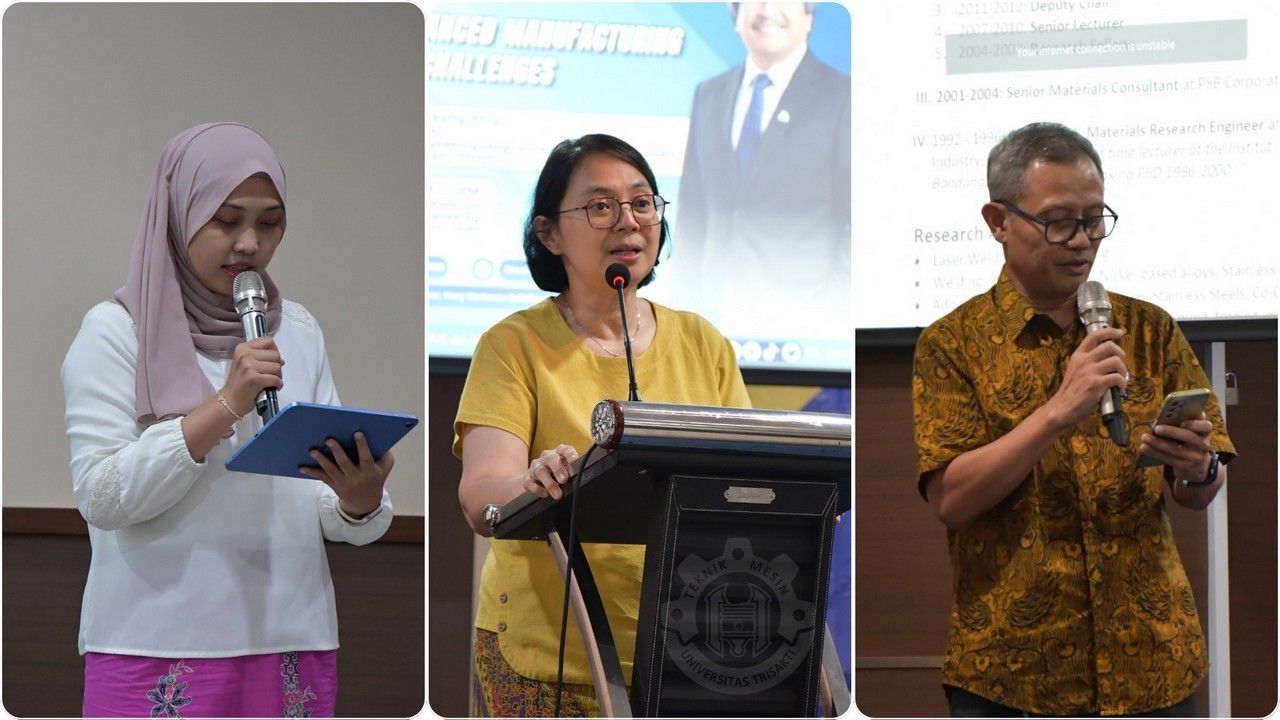
In this public lecture, Prof. Tim Pasang discussed developments in manufacturing and materials, from conventional manufacturing processes to advanced manufacturing technologies, which are increasingly important in modern industry.
The lecture began with an explanation that manufacturing is the process of transforming raw materials into value-added products. The manufacturing process is not only related to production activities but also encompasses material selection, product design, machine and tooling utilization, process planning, marketing, delivery, and customer service.

Prof. Tim Pasang also explained various conventional manufacturing processes such as casting, forming, welding, machining, and forging. These processes are fundamental to engineering because they are used to produce a variety of industrial components, from simple machine components to highly complex products.
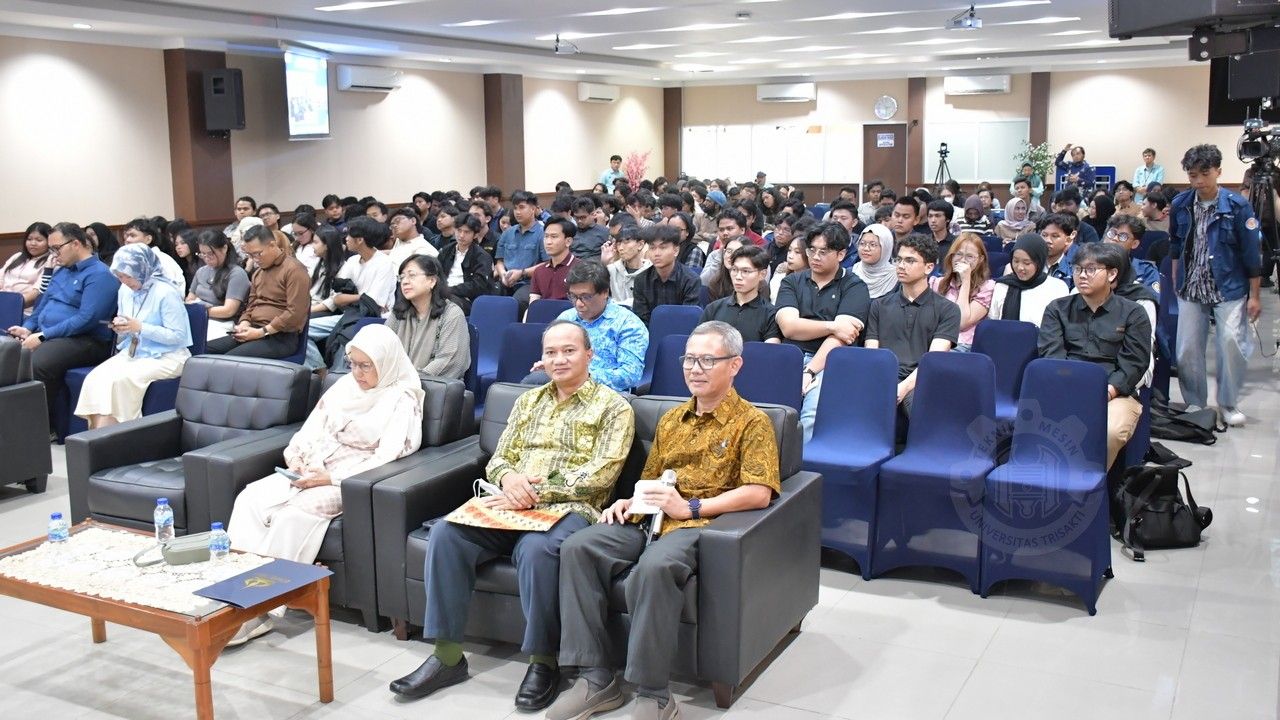
Furthermore, this public lecture also highlighted developments in advanced manufacturing, particularly additive manufacturing or 3D printing for metals. This technology enables the layer-by-layer creation of components based on 3D model data, resulting in complex geometries, improving material efficiency, and opening up significant opportunities for industrial, aerospace, automotive, and biomedical applications.

One of the technologies discussed was Laser Metal Deposition (LMD), a laser-based technology that can be used for the manufacturing, coating, repair, and remanufacturing of metal components. This technology holds significant potential for cost savings, particularly for the repair of high-value components such as turbine blades and other engine components.
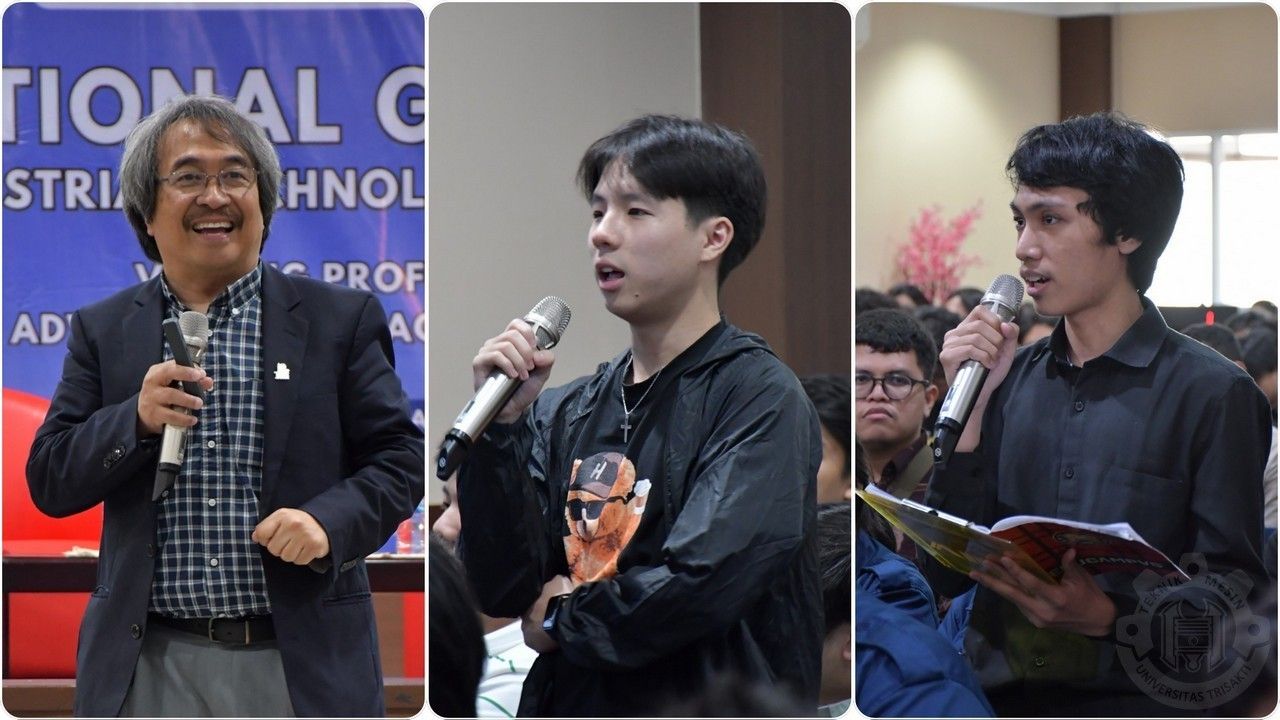
The lecture then continued with a discussion of blue diode laser welding technology, specifically for copper welding and plating. Copper plays a crucial role in the development of electric vehicles due to its high electrical conductivity. However, copper’s reflective nature to infrared lasers presents a challenge, making a hybrid approach using infrared and blue diode lasers an attractive solution.

Through this activity, participants gained insight into the future of manufacturing, which will increasingly lead to more precise, efficient, automated, material-efficient, and sustainable processes. Engineering students are expected to not only understand the fundamentals of manufacturing processes but also be able to keep up with new technological developments to be prepared to face future industrial challenges.

This public lecture provides an invaluable learning platform, connecting academic concepts with developments in global manufacturing technology. Future manufacturing is not just about making products but also about creating smarter, more efficient, and more sustainable processes.
Related links:



Gedung F & G (Hery Hartanto) lantai 5
Jl. Kyai Tapa No. 1 Grogol
Jakarta Barat
Indonesia, 11440
Phone : (62-21) 566 3232 ext. 8434
Location map
Copyright © Universitas Trisakti. All rights reserved.